

This work could not be done without the generous and courageous participation of all the young people that joined the various research activities and the amazing support of our community-based and local academic partners in K’jipuktuk-Halifax (Halifax Refugee Clinic, the YMCA Centre for Immigrant Programmes Youth Outreach team of Greater Halifax and Dartmouth, and Saint Mary’s University), and in eThekwini-Durban (Refugee Social Services and University of KwaZulu-Natal).
Earlier in June, GRABS project leader, Prof. Jane Freedman, and doctoral researcher, Juan Manuel Moreno, participated at the Canadian Sociological Association (CSA) 2026 Annual Conference, entitled Harbours of Hope: Sociology in a Divided World. Organised and hosted in partnership with Dalhousie University’s Department of Sociology and Social Anthropology, the conference took place between 1-13 June, in K’jipuktuk-Halifax, Nova Scotia, Canada.
On 2nd June, Jane and Juan Manuel took part in the online Community-Engaged Migration Research panel session of the Canadian Sociological Association (CSA) Annual Conference Harbours of Hope. Drawing from recent fieldwork with community-based organisations in Canada and South Africa, Jane’s & Juan Manuel’s joint presentation, Learning from participatory community-engaged research within forced migration: Comparative case study of K’jipuktuk-Halifax and eThekwini-Durban, focused on some of the opportunities and challenges for co-design and co-production of knowledge with both young people on the move and community-based organisations which support them.
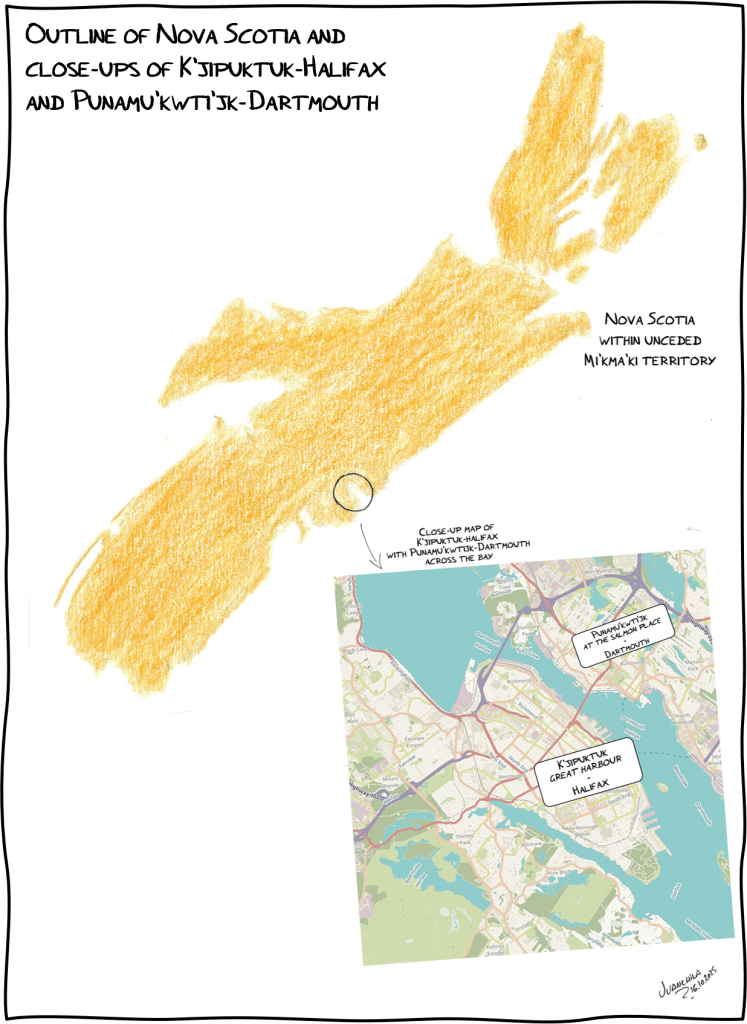
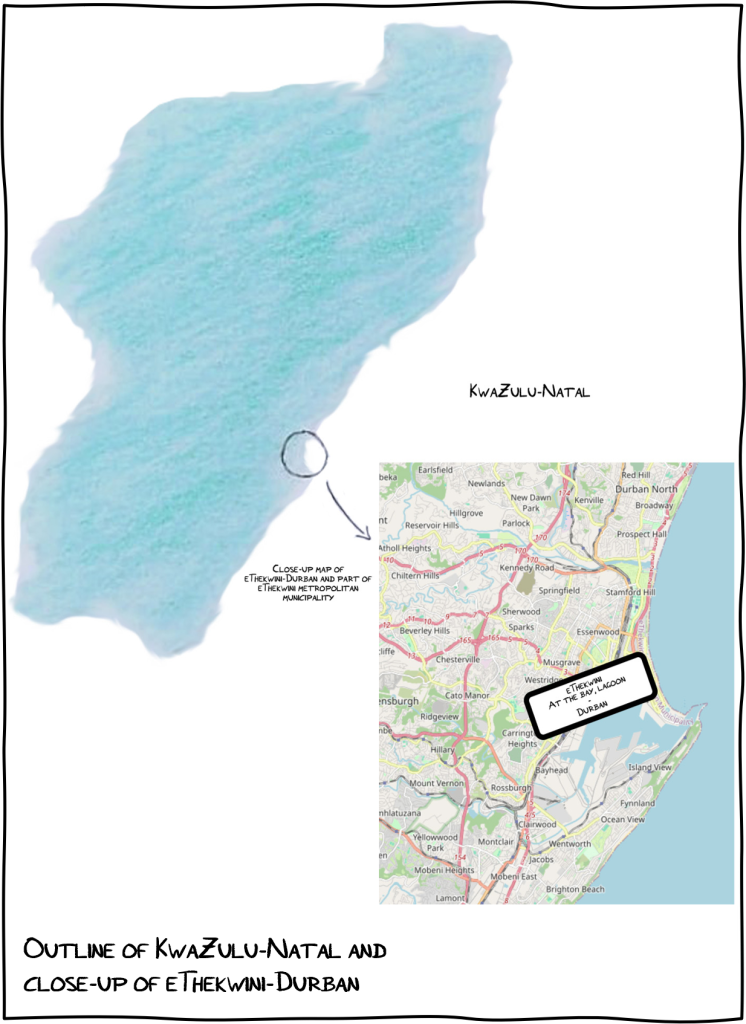
Inaccurate hand drawn map outlines of K’jipuktuk-Halifax (NS, Canada) and eThekwini-Durban (KZN, South Africa) by Juanchila, 2025 & 2026
(CC NC-ND-4.0 2026) for GRABS project. Map close-ups Open Street Maps.
Jane and Juan Manuel highlighted some of the main difficulties of community-engaged research, including: different priorities and agendas of long research projects such as GRABS and the day-to-day operational priorities of community organisations; funding cuts and resources constraints; young people’s availability and motivations to commit to such projects; and what is and how to work towards effective restitution. While recognising that creative participatory research is not in itself necessarily decolonial and non-extractive, they also showed how creative participatory approaches contribute to reduce power differentials, value and showcase the work done by community organisations, and help move towards co-production of knowledge with young people that are more meaningful and relevant to communities.
A few days later, on 11th June, Juan Manuel presented at the Differential Exclusion and Refugee Belonging: Lived Experiences in Canada panel. During his presentation, Recentring young people’s experiences of everyday bordering: Exploring decolonial, intersectional, and creative participatory approaches in K’jipuktuk-Halifax, Juan Manuel drew on emerging findings from his ongoing fieldwork to explore the opportunities and challenges of comics-based research (CBR) approaches in forced migration and (im)mobility research.
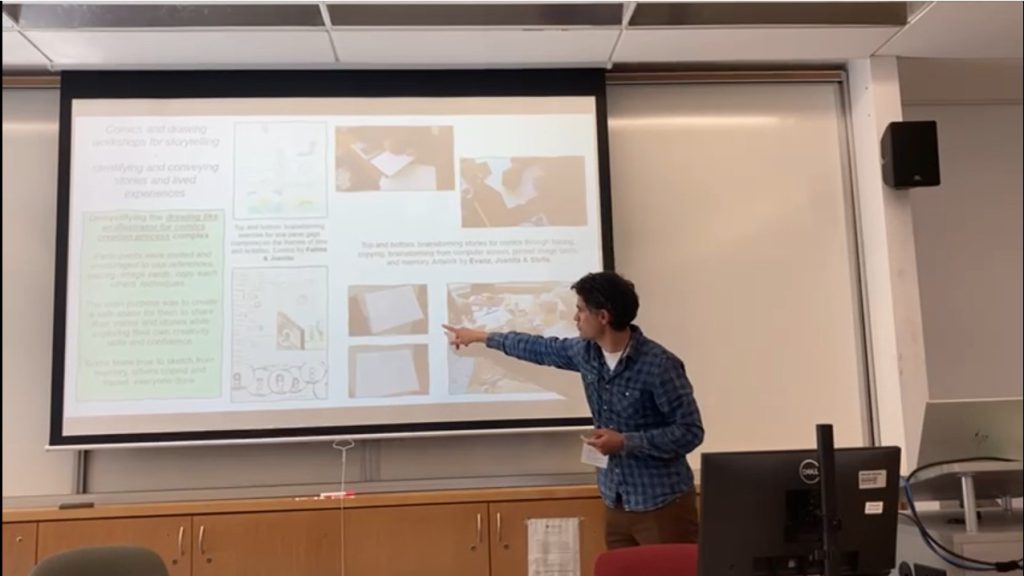
His early findings, emerging from a series of focus group discussions held in February, and creative participatory workshops carried out between April-June, show how CBR approaches can inform research in several important ways, including: helping to better understand, reflect and convey the meanings and feelings behind lived experiences and stories; create safe, non-mediated spaces for self-expression, deep critical thinking, and more horizontal, less asymmetrical relationships; and turn comics and drawings into processes of creation and meaning making – through aspects of verbal and non-verbal communication, movement, affect, and empathy – that go beyond the research creative outputs and artworks themselves.
At the same time, to reduce some of the potential challenges and pitfalls associated with CBR approaches – mostly, but not only, the ability and confidence in drawing, issues with misrepresentation, misinterpretation, and the flattening of individual narratives through victimising, stereotyping or invisibilising, and efficient dissemination of research outputs over meaningful participation – these approaches and the materials used need to both be supportive of slow, non-efficient, deeply reflective, and safe collaborative spaces, and ensure that participant artist youth have a meaningful leading role in the creative, design and dissemination processes of the research.
A video of Juan Manuel’s presentation can also be watched on the link below: