

At the heart of the GRABS Project (Grandir aux frontières)—funded by the European Research Council (ERC) and Université Paris 8—lies a deep commitment to collaboration, participatory research, and elevating community voices. Moving away from extractivist academic models, our recent activities in South Africa used creative methodologies—specifically photography and youth-led podcasts—to allow young people to narrate their own lives, challenge rigid definitions, and take center stage in public spaces.
In Cape Town, we had the privilege of holding a vital collaborative meeting at Bertha House. Partnering with the Congolese Civil Society, whose local network made this gathering possible, we brought together community leaders and key informants originally from the Democratic Republic of Congo (DRC), Tanzania, Zimbabwe, and South Africa. Together, we dived into intensive group discussions to map out the core administrative, social, and structural challenges that displaced youth face locally. Our goal was clear: to understand how we can better support communities—and most importantly, the young people involved—within our limits. We look forward to growing these vital collaborations with refugee-led organizations across South Africa.
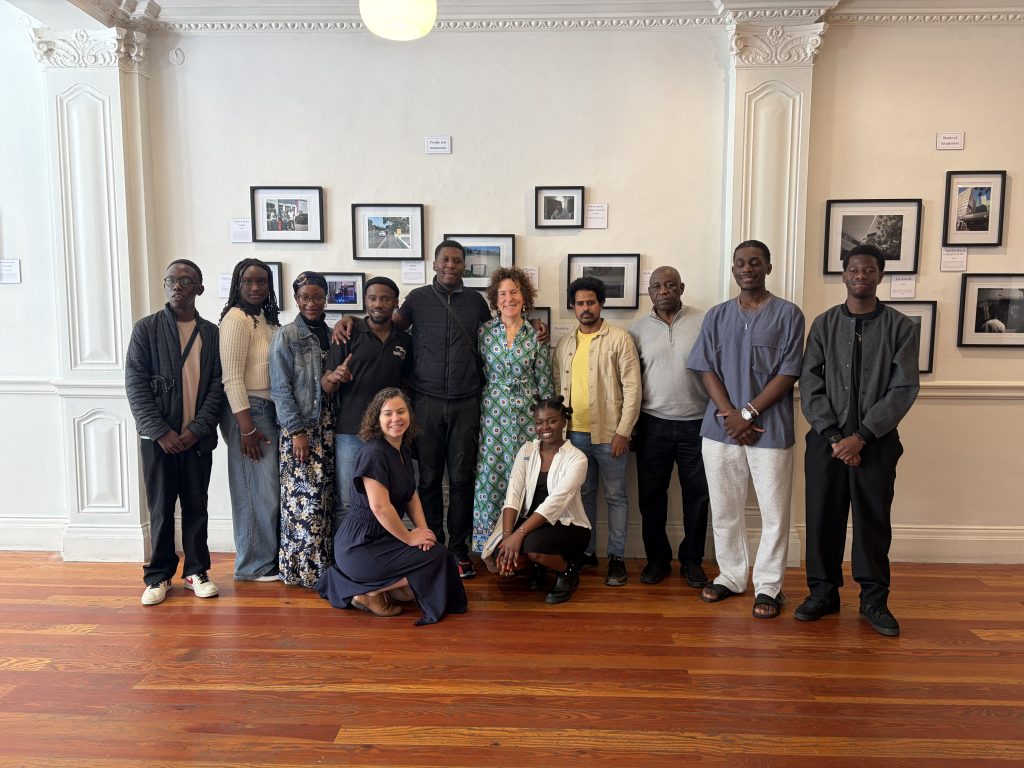
This participatory framework directly shaped our creative outcomes in Cape Town, where we partnered with Africa Unite to work with young people (aged 15–25) navigating forced displacement and the transition to adulthood. The powerful culmination of this work was our exhibition at the 6 Spin Street Gallery, designed around the evocative theme: “Behind the page: see the person, not a paper!” Through their unique creative lenses, these young individuals beautifully challenged administrative definitions and shared their authentic realities. We were thrilled to have this exhibition selected as part of Cape Town’s famous First Thursdays cultural lineup, opening the gallery doors late into the evening for academics, art lovers, and locals to share a joyful, convivial moment and celebrate these vital youth voices together.
We also started mobilising new methods with this group: mapping and filmmaking, occupying spaces in the city.
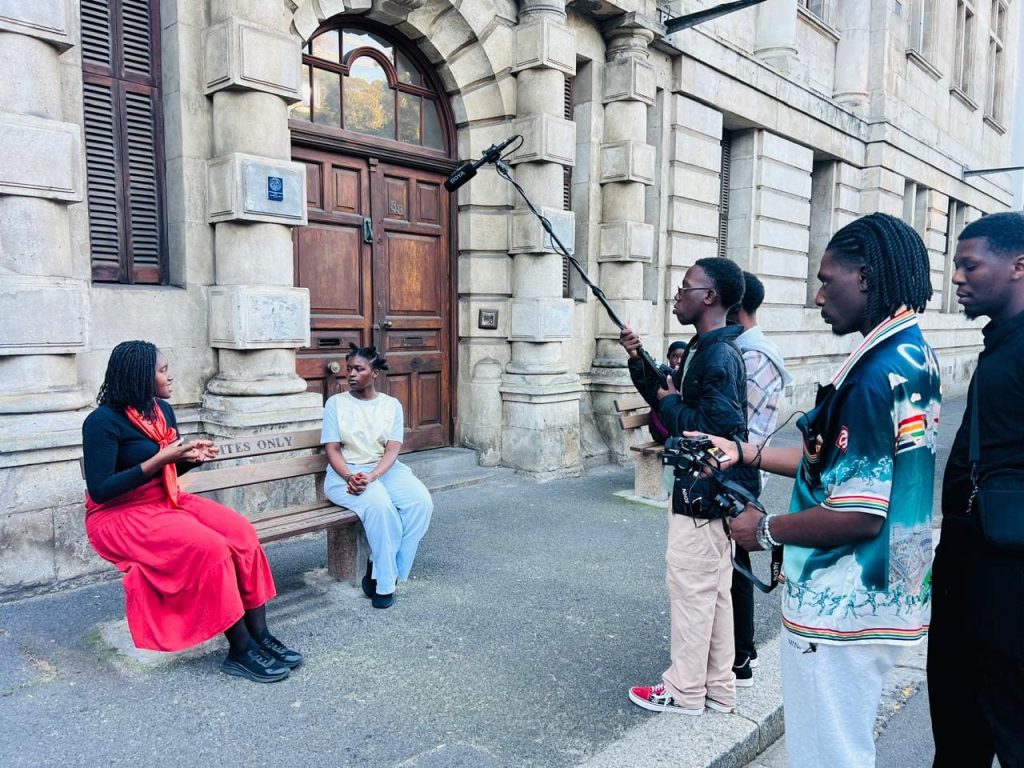
Still in Cape Town, but now with a new partner – SASA, we had the opportunity to work with an overlooked community of young people, while producing podcasts (available on our website.)
Moving to Johannesburg, the project took on an exciting cross-continental dimension at Dibukafé within the EUROPE TALKS framework—hosted in partnership with the EU Delegation to South Africa and the French Institute of South Africa (IFAS). This exhibition highlighted the parallel and intersecting lived experiences of young people navigating forced displacement in both Johannesburg and Paris.
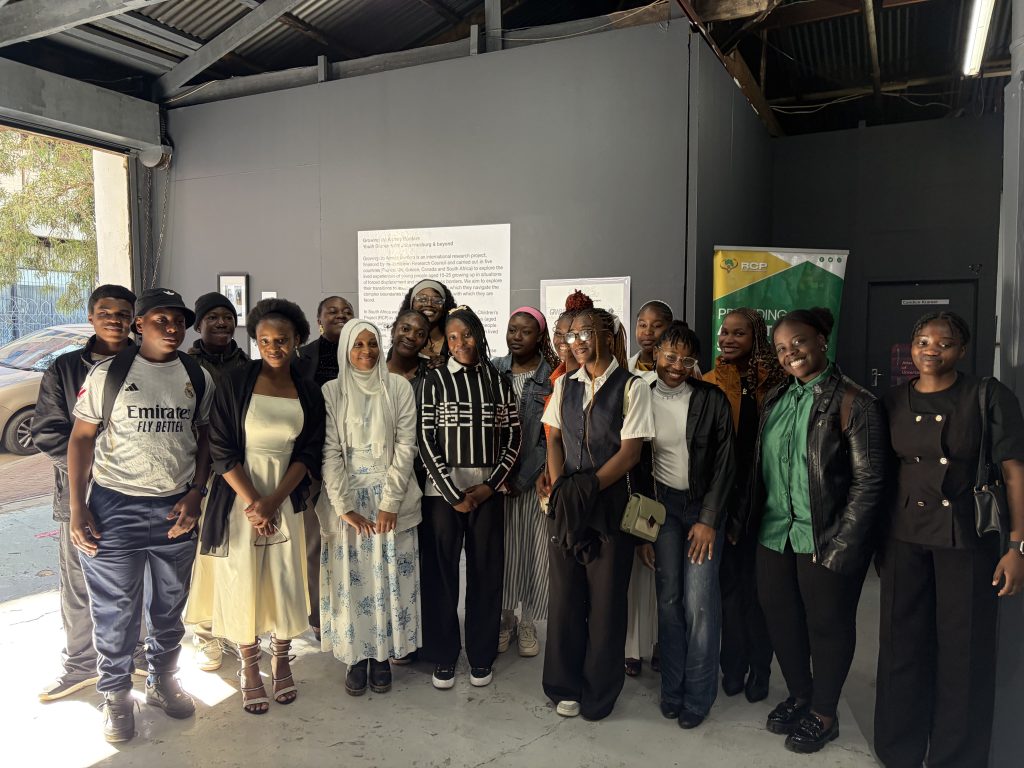
We celebrated the grand finale of this research trip at the Bag Factory Artists’ Studios with the official opening of “Growing Up Across Borders: Youth Stories from Johannesburg & Beyond.” We were overwhelmed by the massive, diverse turnout and deeply inspired to see the audience engage so closely with the artworks, the audio podcasts, and the young artists themselves. This showcase marked a powerful step forward in bridging participatory research with public engagement, leaving a lasting impact in the heart of Johannesburg.
We owe a profound thank you to those who anchored this final launch: Prof. Jane Freedman, for officially opening the exhibitions and framing the significance of these creative methodologies; Enfildah from the Refugee Children’s Project (RCP), for highlighting the profound personal and collective impact this project has had on the youth involved; our other partners Africa UNITE, SASA and the congolese civil society for their engagement with us, and above all, the young participants themselves, whose courage, creativity, and insights are the true foundation of this entire initiative.