

By Aron Tesfai
Neighbourhoods such as Yeoville, Rosettenville, and Hillbrow—dense inner-city areas in Johannesburg—are often described through a language of deficit: crime, poverty, overcrowding, and deteriorating infrastructure. Yet for thousands of migrants and refugees, these places are home. It is a place of survival, community, and aspiration, particularly for young people who have grown up there while navigating the uncertainties of forced migration in South Africa. Our partner organization, Refugee Children’s Project (RCP), is located there, serving people experiencing multiple vulnerabilities.
For two weeks in January 2026 we worked from the RCP office as part of our research project Growing Up Across Borders (GRABS)., We engaged with young people of migrant backgrounds most of whom came from these poor neighbourhoods. Some had arrived in South Africa when they were as s young as one year old; others were born here. Using creative and participatory research methodologies, we sought to understand their everyday lived experiences—how they navigate the challenges of accessing services, documentation, relationships, belonging, identity, and how all these impact their transition to adulthood.
One of our earliest sessions coincided with a highly charged moment in their lives: the day before the release of their Grade 12 national examination (matric) results. Five of the young women in the group were part of the 2025 matric class. Throughout the session, anxiety was intense. While they openly discussed the structural challenges facing young people in refugee situations—documentation barriers, discrimination, exclusion, and difficulties “fitting in” in both migrant and South African communities—their anticipation of the following day seemed to overshadow the discussion.
They spoke about how difficult it is for young refugee people like them to access higher education. Even before knowing their results, they were acutely aware that academic and exam success alone would not guarantee opportunity. Legal precarity, unresolved documentation, and financial constraints loomed large. Still, they worried deeply about their performance—about whether their years of hard work had paid off, and about the expectations of their parents, many of whom had invested immense hope in their education as a pathway out of precarity.
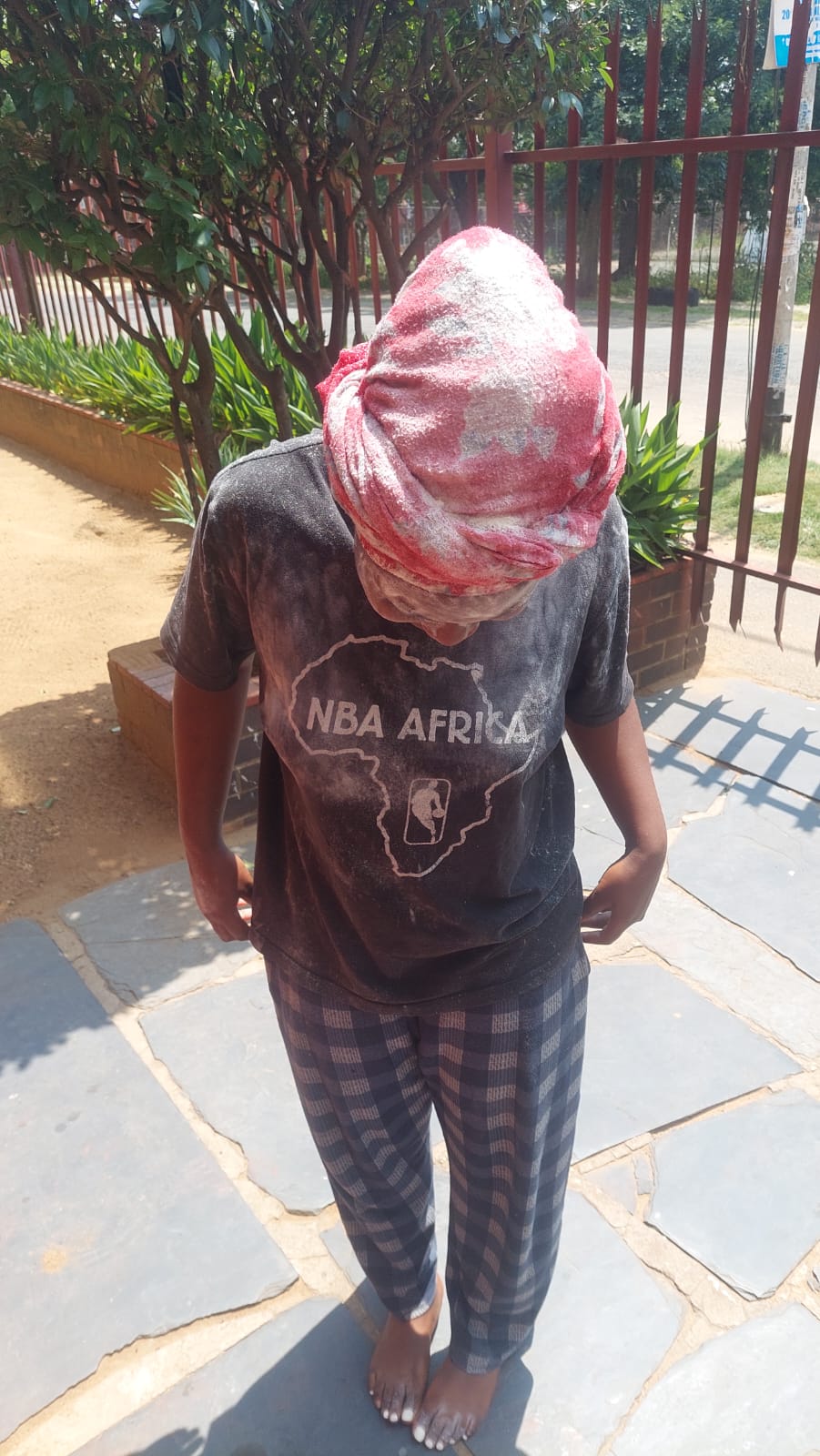
At their request, we agreed to start our programme later the following day, as they wanted to collect their matric statements in the morning. When the first of the five arrived, something caught my attention: her clothes and hair were dusted with white powder. Assuming she had accidentally dirtied herself, I was about to suggest she clean up. Before I could say anything, the NGO staff—who knew the young women and their cultural context well—burst into celebration. There were ululations, shouts of praise, and congratulations.
The white powder was not accidental. It was flour. Among Congolese (DRC) communities, throwing flour on children is a celebratory practice, reserved for moments of academic excellence. It is a public expression of pride, honour, and achievement. In this group alone, nine of the young women were from the Democratic Republic of Congo. Four had completed matric in previous years. Although all achieved bachelor-level passes, only one is currently enrolled at university—made possible by an exceptional result and a partial (50%) scholarship. Now she is not sure how she will finance her second year despite successfully completing the first year.
This year, all five matriculants passed with bachelor degrees (the highest pass level)1, most with distinctions ranging from one to five subjects. Their success was extraordinary. It was a moment of pride not only for them, but for their families and the wider community. Their achievements would be talked about for weeks—proof that, despite adversity, their children had excelled.
Yet this moment of celebration sat alongside a deep contradiction. The day before, these same young women had spoken critically about parental pressure within most Congolese families. They described how education and children’s behavior is often tied to family honor and public image, sometimes at the expense of children’s own interests and well-being. Comparisons with other children, expectations to study particular subjects, and the burden of ‘representing’ the family were described as common—and often unhealthy. For these young people who have spent most of their lives in South Africa, these expectations can feel heavy, forcing them to navigate conflicting cultural value systems in an already very constraining environment of non-welcome in SA. For example, expressing their opinions and giving responses might be considered a form of disrespect to the elders and as if they were acting like a ‘South African child’,
Still, despite these tensions, the matric results brought joy, relief, and pride. Their hard work felt seen. But that moment might be fleeting for most of them. Behind the celebration lies a harsh reality: most of these young women will face barriers to continuing to higher education. Their legal status remains unresolved. Their parents cannot afford tuition fees. Scholarships and funds are reserved for South Africans, and often inaccessible to precariously documented students. Academic excellence, in their case, has little to no impact on them .
Their story exposes one of the most painful contradictions of forced migration: young people can do everything ‘right’- work hard, excel academically, honor their families-and still find their futures blocked by structural barriers beyond their control. Success becomes symbolic rather than transformative.
These young women’s achievements matter. They matter to their families, their communities, and to us as researchers and advocates. But their story also forces us to confront an uncomfortable truth: in contexts of legal precarity and exclusion, winning does not necessarily mean moving forward.
Until the documentation system, funding structures, and higher education systems meaningfully include migrant and refugee youth, moments of excellence will continue to end in disappointment. Flour will be thrown in celebration—but doors will remain closed.
And that is perhaps the greatest injustice of all.
1 – In South Africa, when matriculants (Grade 12 learners) pass Matric, their results are reported at different pass levels. These levels determine what kind of further education they are eligible for. They are part of the National Senior Certificate (NSC) system. Learners who achieve Bachelor’s Degree Pass meet the minimum academic requirements to apply to study for a bachelor’s degree at a university