


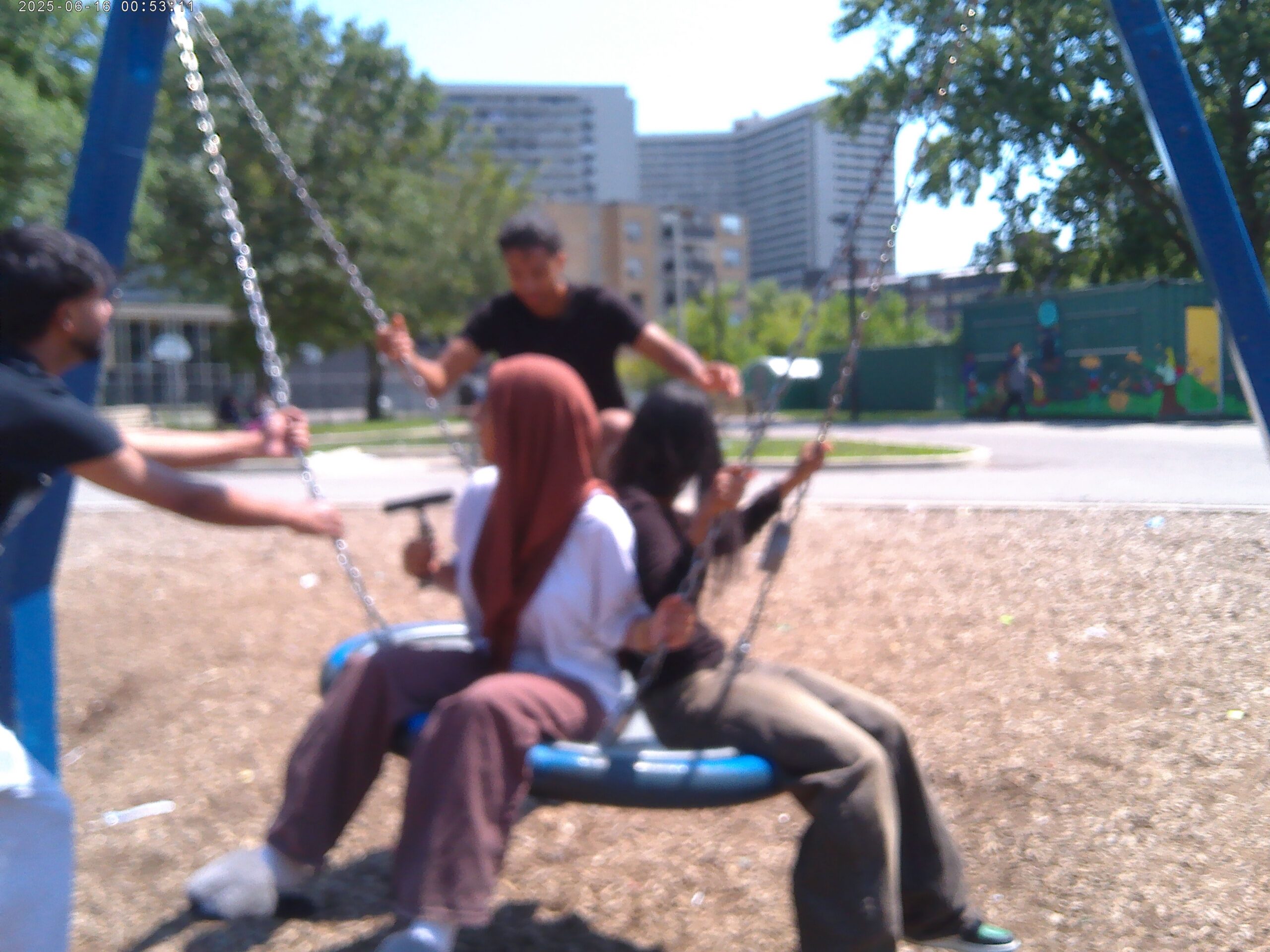
Sharing Stories in Toronto, Fieldwork visit report by Jessi Kume, March- September 2026
My PhD fieldwork research was carried out in Tkaronto, today also known as Toronto, on the traditional territory of many nations, including the Mississaugas of the Credit, the Anishinabeg, the Chippewa, the Haudenosaunee and the Wendat peoples. Tkaronto is covered by Treaty 13 with the Mississaugas of the Credit and by the Dish With One Spoon Wampum Belt Covenant, an agreement to share and care for these lands. I am thankful, as a guest on these lands, to have been able to conduct research for my PhD here.
My fieldwork in Toronto wrapped up at the end of August. Over six months, I worked with young people with forced migration experience and had conversations on how their lives, belonging and how they make sense of the migration system in the city, using their own creative tools.
A total of 34 young people joined across 14 creative participatory workshops. At The Neighbourhood Organization (TNO) in Thorncliffe Park, we ran 6 creative participatory workshops: 3 podcasts, 2 photography, 2 neighborhood walking tours, and 1 video-making. With the healthcare collective Ya Estoy Aqui, we ran 1 podcast and 1 photography workshop in Spanish with young women from Latin America. With the Sanctuary Students and Scholars Collective (S4), we ran 2 photography workshops, one podcasting workshop and one storytelling workshop. The workshops were held in different location such as the Global Migration Institute (GMI) that hosted me from March to June, the Toronto Reference Library, TNO and OCADU. Groups of youth who partecipated ranged from 3 to 9 young people. Every participant received a certificate and a CAD 20 gift card for each session they attended, in recognition of their time and expertise.
The youth who participated were aged 18–26 years old, were experiencing varying migrant situations and came from diverse backgrounds and countries of origin, including: Nigeria, Eritrea, Afghanistan, Syria, Haiti, UAE, Libya, Mexico, Colombia, Costa Rica, Pakistan, Bangladesh, Sri Lanka, Camerun.
Podcasting
In the first sessions of each podcast workshop, participants discussed what they wanted to share through focus group discussions and word-cloud maps. From there, we brainstormed themes, formats and roles, and the youth worked together on scripting and structuring each episode. Participants learned to use the recording equipment, and two groups also chose to edit their own episodes, learning to use the software Reaper.
In March, three youth met at the GMI office and centred their episode on belonging: how to build a home away from home as teenagers navigating a new country after being forced to leave their own. They talked about code-switching, making friends, mixed feelings, and giving back to the community. A second March episode, recorded with TNO, featured two 18-year-olds who process their experiences through art, comics and painting, and reflected on the central role creative expression plays in their lives.
In June and July, more episodes were recorded at TNO in Thorncliffe Park, on girl empowerment and on how to create a safe space in schools. One episode accompanied the photography workshop, with participants describing the pictures they took and their experience of the workshop. In July, together with Ya Estoy Aqui, four young Latina women recorded an episode in Spanish about migration from a young woman’s perspective discussing the duality and emotions of their migration journey.
Episodes can be listened to on the GRABS Podcast page
Photography and Photovoice
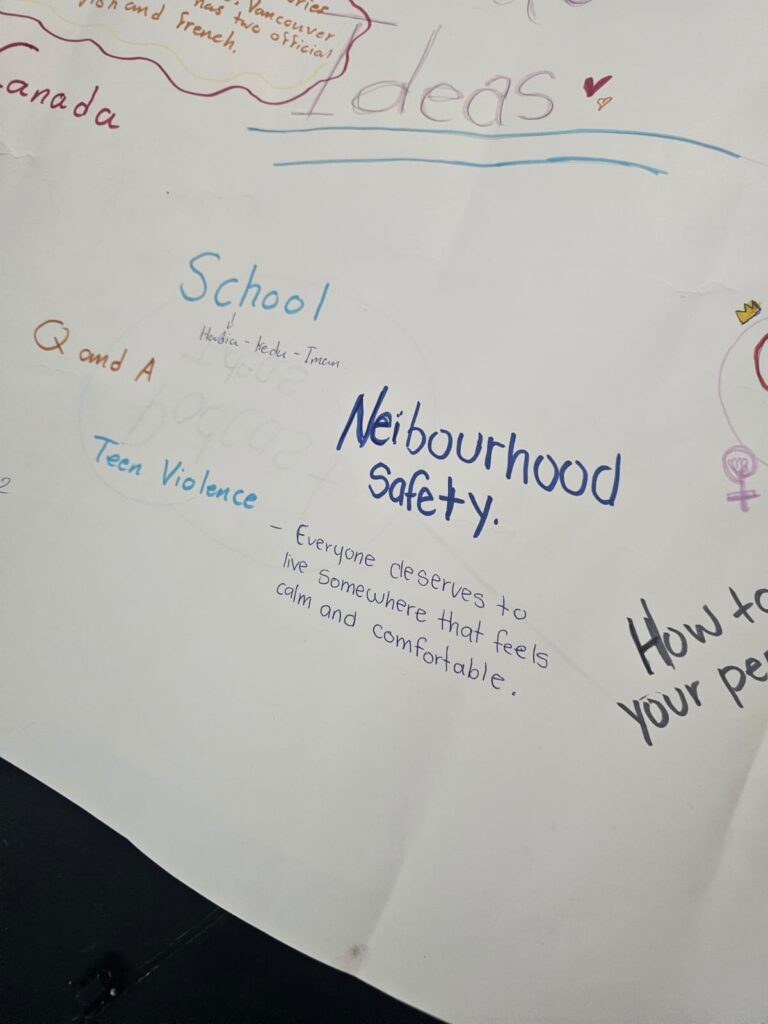
Photography was the method that drew the most interest and led young people to experiment the most. Across five photography workshops participants received digital cameras, took photos between sessions, and brought them back for discussion with the group. Together, they sorted their photos into themes, reflecting on the meanings, stories and feelings behind them, and in this way took part in the analysis.
At TNO, the first group of nine youths met four times in June. A second TNO group of four youth followed in August. In July, five young women from Latin America took part in a photography workshop. We collaborated with a peer youth who is also co-funder of Ya Estoy Equi by running and shaping the workshops together. In August two further photography workshops were held with six sanctuary scholars. Their photographs centered on freedom, friendship, family, nature and empowerment.
Neighbourhood walking tours and video
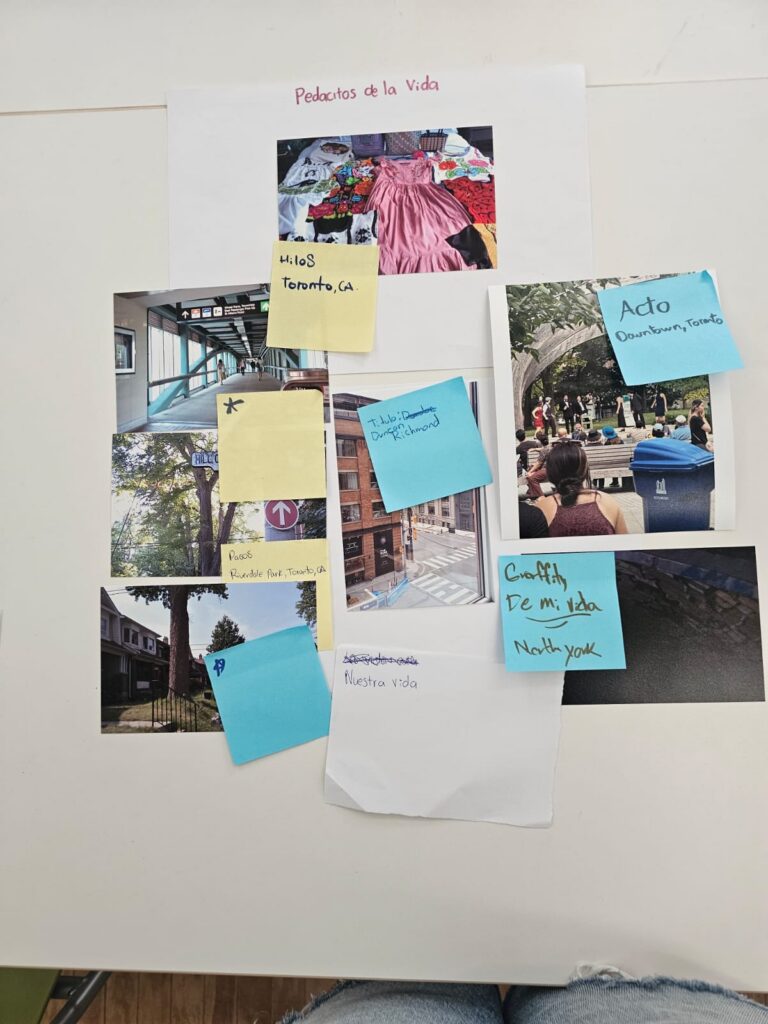
The walking tours grew out of the photography workshops. During the second session of TNO’s Photography workshop, the youth took ownership of the workshop and brought it in a new direction. They organised a walk around Thorncliffe Park to visit the places where they spend most of their time. The walk prompted broader conversations, and the youth decided to record a short video with interviews and a recording of their conversation while walking, which we named the Neighbourhood Walking Tour. The second TNO group repeated the walking tour in August.
Finally, one participant asked to lead a walking tour in her own neighbourhood, Jane and Finch, which is often stigmatised in Toronto, to share her own perspective on it.
Storytelling
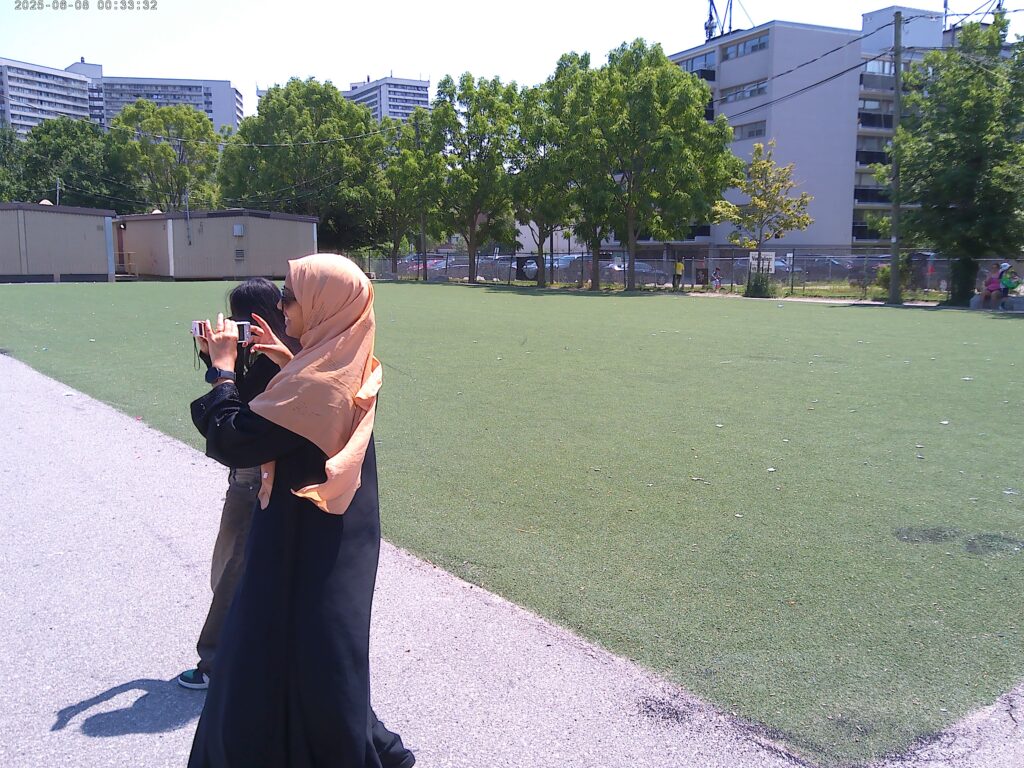
Throughout May and June, five young women met weekly at GMI for a storytelling workshop. Over the sessions, connections formed and themes emerged organically, resulting in poems and short stories about arriving in a new country and becoming adults. These were collected in a booklet titled Canada in My Eyes. As the workshop went on, the participants took increasing ownership of the process: by the final two sessions, my role was mostly to observe, support and provide materials. Participants regularly stayed up to an hour after each session to keep talking about their lives, experiences, challenges and opportunities.
You can red Canada In My Eyes here
Thank you
I am very thankful for the privilege and opportunity I had to collaborate with these young people and I am grateful to the time I got to spend in Toronto as a young newcomer myself already carrying my forced migration background in my suitcase. This made this fieldwork and the connection I got to have with the youth something that exceeds a work contract and has been even healing to some extent. Alongside the workshops, I took part weekly in youth programs for newcomers in Toronto at FCJ, and when possible I met online with the Sanctuary Students and Scholars Collective. Above all, I cannot express my gratitude enough to all the youth who trusted me with their stories and shared their critical perspectives on the Canadian and Torontonian migration system.
The support of our partner organisations was essential to meet the youth, build trust, and plan workshops around their realities. I am very grateful to Vai and Yousef at The Neighbourhood Organization, Paulina and Jonathan at Ya Estoy Aqui, Brantella and Fatima at S4 Collective. I am also very thankful to Anna Triandafyllidou and the Global Migration Institute, for supporting this research with coordination, venues and valuable insights on the progress of my PhD project.